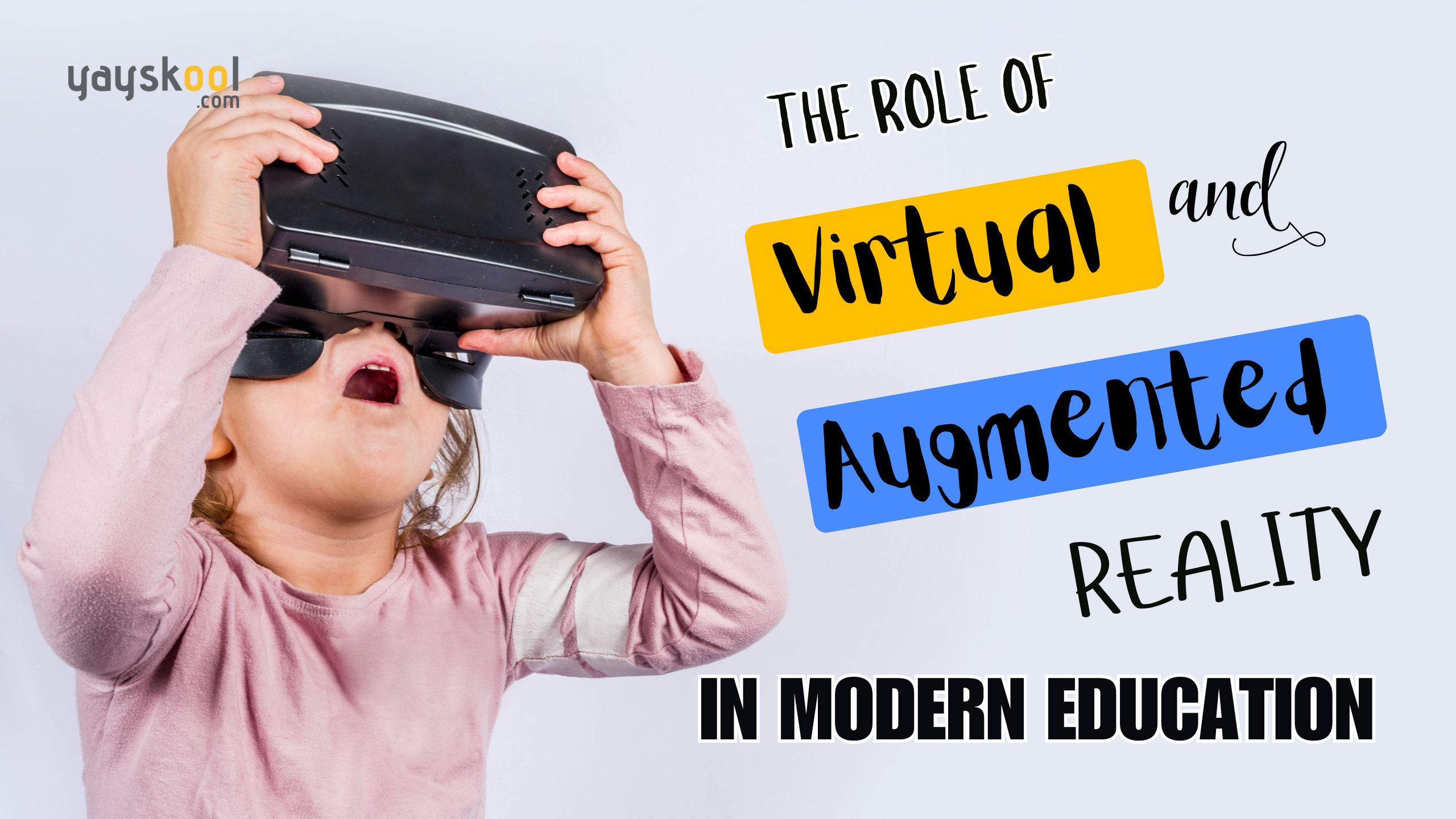
The Role of Virtual and Augmented Reality in Modern Education
In recent years, Virtual Reality (VR) and Augmented Reality (AR) have gained significant attention across various industries, and education is no exception. These immersive technologies are transforming how students learn, engage with content, and develop critical skills. By blending the real and virtual worlds, VR and AR are offering new opportunities to enhance educational experiences and bridge gaps that traditional learning methods struggle to address. Let’s dive into how these technologies are reshaping modern education and the immense potential they hold for the future.
What is Virtual Reality (VR) and Augmented Reality (AR)?
Before exploring the role of VR and AR in education, it’s important to understand what these technologies are:
-
Virtual Reality (VR): VR is a completely immersive digital environment that shuts out the real world and places users in a simulated world. In education, VR can transport students into virtual spaces like historical sites, outer space, or deep into the human body, offering experiences that are impossible or impractical in the real world.
-
Augmented Reality (AR): AR overlays digital content onto the real world, enhancing the physical environment with virtual elements. For example, AR can allow students to see 3D models of objects like dinosaurs or molecules through their smartphones or AR glasses, blending digital learning with real-world surroundings.
How VR and AR are Shaping Education
Immersive Learning Experiences
One of the most powerful applications of VR and AR is their ability to create immersive learning experiences that go beyond traditional textbooks and lectures. Students can explore complex subjects in interactive and engaging ways, making learning more tangible and memorable.
-
Virtual Field Trips: VR enables students to take virtual field trips to places they might never visit in person, such as ancient Rome, the surface of Mars, or inside a volcano. These experiences foster curiosity and allow for hands-on learning without leaving the classroom.
-
Simulations and Labs: Students can engage in virtual experiments or medical procedures using VR or AR. For example, medical students can practice surgeries in a virtual operating room or engineering students can interact with complex machinery in a simulated environment, reducing the risk of mistakes in real-life scenarios.
Enhancing Engagement and Motivation
Traditional educational methods can sometimes fail to capture students' attention, leading to disengagement. VR and AR tap into the natural human fascination with technology and interactive content, boosting motivation and participation.
-
Gamification: Both VR and AR integrate elements of gamification, making learning feel more like an exciting adventure. In VR environments, students can earn points, badges, and unlock achievements as they complete tasks, while AR can make studying feel more like a treasure hunt, motivating students to explore and discover new concepts.
-
Hands-on Learning: VR and AR engage multiple senses, including sight, hearing, and sometimes even touch, offering students a hands-on approach to subjects that may be difficult to understand through passive learning. This active engagement helps solidify concepts and retain information more effectively.
Personalized Learning
VR and AR provide opportunities for personalized education by adapting learning experiences to meet the specific needs and abilities of individual students. This can be particularly beneficial in diverse classrooms where students have varying learning paces and styles.
-
Adaptive Learning: In VR environments, content can adapt to a student’s performance. For instance, if a student is struggling with a particular concept, the system can offer additional resources or exercises to help them improve. Similarly, AR apps can help students progress at their own pace, offering instant feedback and tailored challenges.
-
Learning at Your Own Pace: Students who need extra time on certain topics can repeat VR lessons until they fully understand the material, while AR applications can guide them through interactive exercises at their own speed, ensuring they master key concepts before moving on.
Improving Collaboration and Communication
VR and AR can also facilitate collaborative learning, allowing students to work together in virtual spaces or engage with each other through augmented tools in the classroom.
-
Collaborative VR Spaces: VR allows students to interact with each other in virtual environments, even if they’re geographically separated. This is particularly valuable in remote or hybrid learning situations. Students can solve problems together, share ideas, and collaborate on projects in ways that were once limited to face-to-face interactions.
-
AR for Group Work: AR allows students to work on shared tasks in real-time, using digital tools overlaid on physical objects. For example, students can collaborate on building a 3D model of a structure, with each group member contributing virtually to different parts of the design.
Helping Students with Special Needs
VR and AR technologies are proving to be invaluable tools for students with special needs, offering support and providing them with unique learning experiences that meet their specific requirements.
-
Autism Spectrum Disorder (ASD): VR can help students with ASD practice social scenarios, like job interviews or classroom interactions, in a safe, controlled virtual environment. By providing repeated practice, VR helps these students build confidence and improve their social skills.
-
Physical Disabilities: For students with physical disabilities who may have difficulty participating in physical education or field trips, VR allows them to experience physical activities, like swimming or mountain climbing, in a virtual setting. AR, on the other hand, can help students with visual impairments by highlighting key features of the environment or using voice-guided instructions.
Preparing Students for the Future Workforce
As technology continues to advance, the workforce increasingly demands tech-savvy employees who are familiar with emerging tools like VR and AR. Integrating these technologies into education equips students with valuable skills they will need in their future careers.
-
STEM Education: VR and AR have proven particularly effective in STEM (Science, Technology, Engineering, and Math) education by enabling students to visualize and experiment with abstract concepts. Students can interact with molecular structures in AR or participate in a virtual coding bootcamp, preparing them for jobs in tech-driven fields.
-
Skills Development: Students can develop essential soft skills, such as communication, problem-solving, and critical thinking, through virtual simulations that require teamwork, decision-making, and creative thinking.
The Future of VR and AR in Education
While VR and AR are already showing immense promise, their potential in education is just beginning to be realized. As these technologies continue to evolve, they will become even more immersive, accessible, and affordable. The widespread adoption of VR headsets, AR-enabled smartphones, and other hardware will make these tools available to a broader range of students, further revolutionizing how we learn.
Educators will have more powerful tools at their disposal, offering increasingly sophisticated simulations, dynamic learning environments, and adaptive educational experiences. As VR and AR become commonplace in classrooms worldwide, the boundaries of what’s possible in education will continue to expand, making learning more engaging, interactive, and effective.
Virtual and Augmented Reality are not just futuristic concepts—they are already changing the way we educate students. By providing immersive, engaging, and personalized learning experiences, VR and AR are making education more accessible and effective than ever before. From interactive simulations and field trips to collaborative learning and skills development, these technologies are bridging gaps in traditional education methods and preparing students for the challenges of tomorrow’s world.












.jpg)