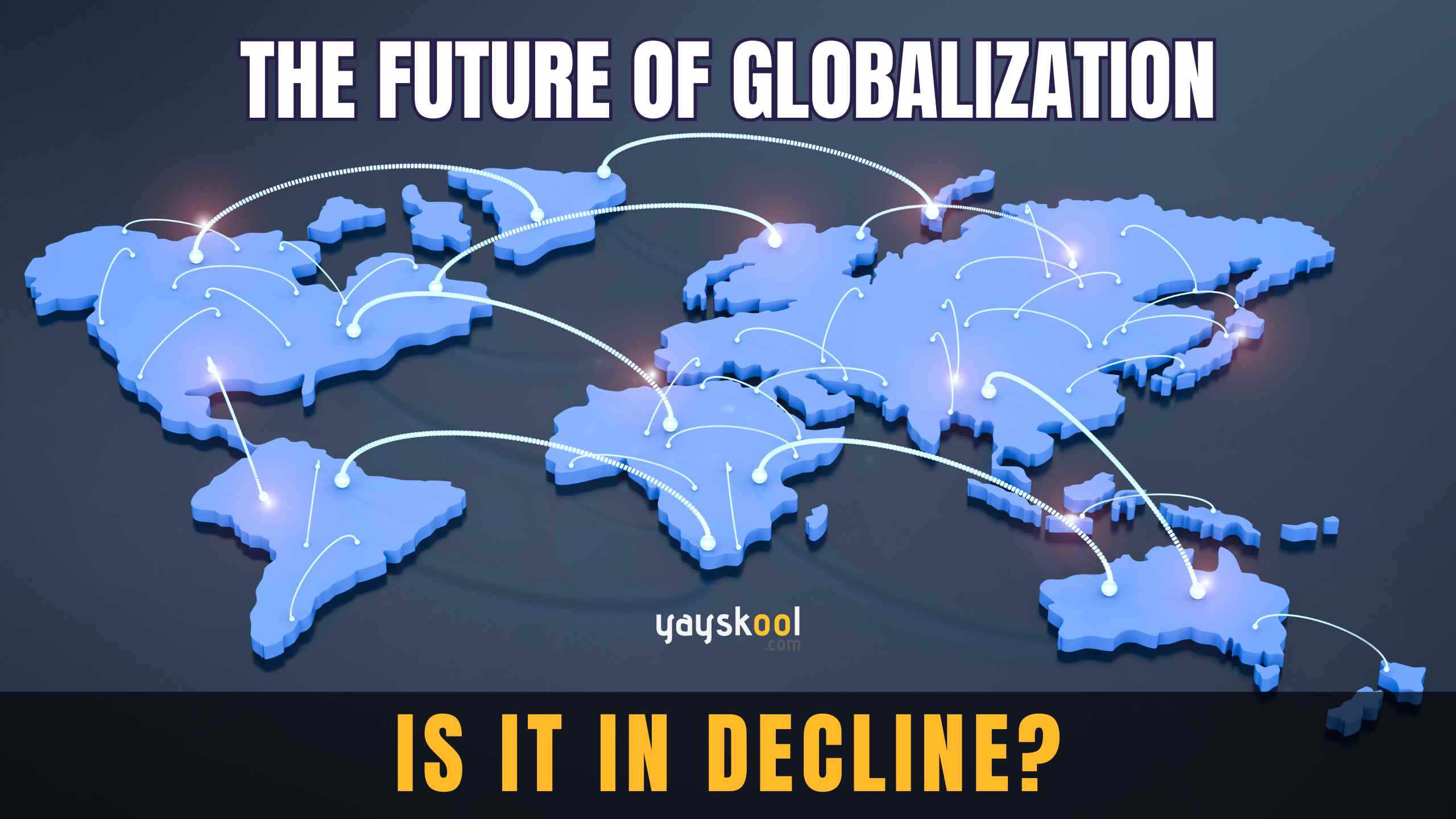
The Future of Globalization: Is It in Decline?
Globalization, once hailed as the unstoppable force that would bring the world closer together, seems to be facing a growing wave of resistance. What was once a driving force behind economic growth, technological advancements, and cultural exchange is now being questioned, with some even speculating that its days are numbered. So, is globalization truly in decline, or is it merely undergoing a transformation?
What Is Globalization, Anyway?
At its core, globalization refers to the interconnectedness of the world's markets, businesses, and economies. It’s about goods, services, ideas, and people flowing freely across borders. Over the past few decades, advancements in technology, transport, and communication have fueled this interconnectedness, creating a global village where it’s easier than ever to interact with people and companies thousands of miles away.
Why the Decline Talk?
-
Rise of Protectionism and Nationalism One of the most immediate threats to globalization comes in the form of rising protectionist policies. Countries like the U.S. under former President Trump, the UK with Brexit, and various others have shifted toward more isolationist stances. Protectionism—through tariffs, border restrictions, and immigration policies—puts up barriers that discourage international trade and cooperation. The rhetoric around "putting your country first" seems to be a counter-movement to the free-flowing global economy.
-
Trade Wars The escalating trade wars, notably between the U.S. and China, have added another layer of uncertainty to the global trading system. With countries slapping tariffs on each other’s products, the once seemingly boundless economic exchanges have now hit roadblocks. Trade wars are costly for both the countries involved and global markets, undermining confidence in the predictability of the international economy.
-
The COVID-19 Pandemic If there was one event that exposed the weaknesses of globalization, it was the COVID-19 pandemic. The disruption of global supply chains, the halt of international travel, and the spread of economic fallout across nations highlighted how vulnerable interconnected systems can be. It led to many nations rethinking their dependence on global supply chains, especially for essential goods like medical supplies, food, and electronics.
-
Technological Advancements and Automation While technology has fueled globalization, it’s also contributing to its potential slowdown. Automation, artificial intelligence, and robotics mean that certain manufacturing jobs no longer need to be outsourced to other countries. Companies are increasingly able to produce goods closer to home, reducing the need for global supply chains. In addition, digital platforms are allowing individuals and businesses to connect directly with each other, bypassing traditional international trade routes.
-
Climate Change and Environmental Concerns The environmental impact of globalization is becoming more difficult to ignore. The transportation of goods over vast distances, often by fossil fuel-powered ships and planes, contributes significantly to carbon emissions. With growing concerns about climate change, there’s a rising call for more localized production and consumption to reduce ecological footprints. This shift could lead to a slow decoupling of global trade in favor of more sustainable, localized economic systems.
Is Globalization Really in Decline?
While there are compelling arguments suggesting a decline in the traditional form of globalization, it’s important to recognize that globalization isn’t necessarily disappearing—it’s just evolving. Here are a few points to consider:
-
Regionalization: A New Era of Trade Pacts With global trade becoming more fragmented, there’s been a noticeable shift toward regional trade agreements. Deals like the Comprehensive and Progressive Agreement for Trans-Pacific Partnership (CPTPP) and the African Continental Free Trade Area (AfCFTA) indicate that while global unity may be in decline, regional collaboration could be on the rise. These pacts allow countries to foster economic ties with neighboring nations, bypassing some of the tensions seen in larger global agreements.
-
Digital Globalization While physical goods and people might be facing more barriers, digital goods and services are thriving. E-commerce is booming, with companies like Amazon and Alibaba allowing businesses to sell products across the globe without the need for a traditional supply chain. Additionally, digital services like remote work, freelance platforms, and cloud computing are increasingly creating new forms of international cooperation.
-
Supply Chain Resilience and Localization In response to the weaknesses exposed during the pandemic, countries are investing in more resilient supply chains. This doesn’t necessarily mean a complete retreat from globalization, but a shift towards a more flexible model that balances global integration with local production. Companies are also diversifying their supply chains to avoid over-reliance on a single region or country, leading to the growth of what’s called “nearshoring”—bringing production closer to home.
-
Global Problems Require Global Solutions Despite the setbacks, many challenges—like climate change, pandemics, and international terrorism—are global in nature. These problems require cooperative global solutions, meaning that some level of interconnectedness is essential. Global institutions like the United Nations, the World Health Organization, and the World Trade Organization are pivotal in addressing these issues, suggesting that even if globalization is retreating in some areas, it’s expanding in others.
The Future: A More Complex Globalization?
Rather than a dramatic decline, the future of globalization may involve a more complex, multi-layered approach. We could see:
-
Hybrid Models: A blend of regional trade cooperation with global digital commerce.
-
Localized Production with Global Markets: Some production may move closer to home to ensure resilience, but the global exchange of information, services, and technology will continue to thrive.
-
Greater Emphasis on Sustainability: A new form of globalization may prioritize environmental impact, encouraging more localized sourcing and greener practices.
Globalization Is Not Gone, It’s Changing
While the current era may seem like a period of retrenchment for globalization, it’s important to recognize that the forces of interconnectedness—especially in the digital and knowledge economies—are still very much at play. The future will likely involve a more balanced approach: less reliance on long supply chains and more focus on resilient, regional collaborations, but with a continued focus on solving global challenges together.
Rather than signaling the death of globalization, these changes mark its evolution into something more sustainable, adaptable, and mindful of the world’s shifting political, economic, and environmental landscapes. The age of hyper-globalization may be over, but a new, more strategic form of globalization is emerging.













.jpg)