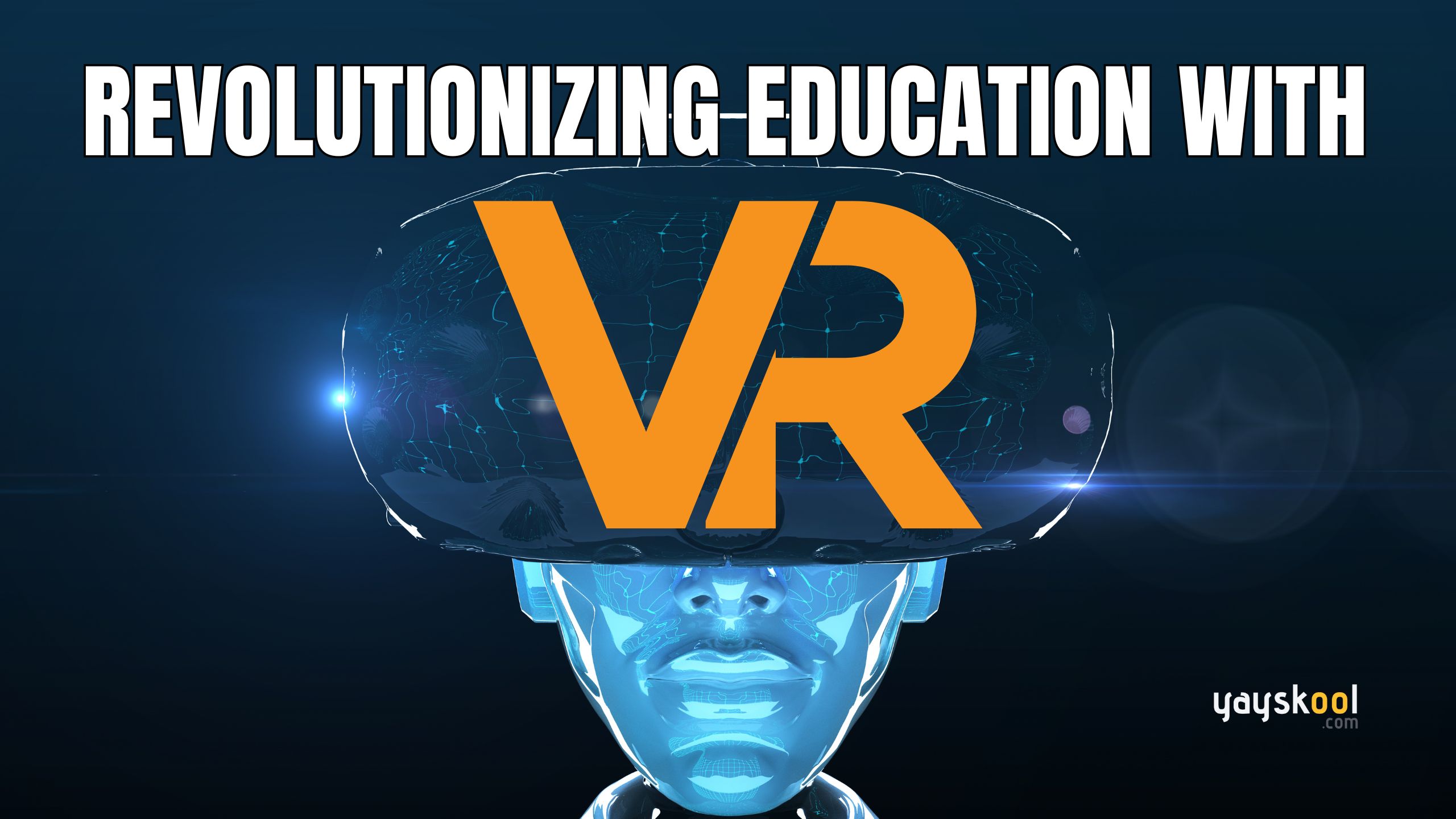
Revolutionizing Education with Virtual Reality (VR)
In recent years, the world of education has undergone a seismic shift, embracing new technologies that are reshaping how knowledge is delivered and consumed. Among the most transformative innovations is Virtual Reality (VR). VR has moved beyond the realm of gaming and entertainment, making its way into classrooms and educational spaces, unlocking new ways of learning that were once the stuff of science fiction.
What is Virtual Reality in Education?
Virtual Reality refers to a computer-generated simulation of an environment where users can interact with the surroundings in real-time. This immersive experience can take students beyond the limitations of traditional textbooks, allowing them to explore different worlds, historical events, or even microscopic structures—all from the safety and comfort of a classroom. With VR, students are no longer passive recipients of information but active participants in their learning journey.
Enhancing Engagement and Retention
One of the biggest challenges in education is maintaining student engagement, especially when dealing with complex or abstract concepts. With VR, students can engage with the material in a hands-on way, which leads to better understanding and retention. For example, instead of reading about ancient Egypt in a textbook, students can "walk" through a 3D simulation of the pyramids, interact with artifacts, and even "talk" to ancient Egyptians in real time. This form of experiential learning has been shown to improve memory recall and deepen comprehension.
Personalized Learning Experiences
VR also facilitates personalized learning at an unprecedented level. Traditional classrooms often struggle to cater to individual learning styles and speeds. VR offers the opportunity for students to learn at their own pace. Some students may need more time with certain concepts, while others may wish to explore topics in greater depth. VR allows for such customization by providing interactive scenarios that adjust based on the learner's progress, ensuring that no student is left behind.
Breaking Down Geographic and Economic Barriers
One of the most significant advantages of VR in education is its ability to break down geographic and economic barriers. With VR, students from remote or underserved areas can access the same resources, lessons, and virtual field trips as those from well-funded schools. Students in rural communities, for example, can take a virtual tour of the Louvre Museum, explore the Amazon Rainforest, or witness a volcanic eruption—experiences that would otherwise be out of reach due to geographic limitations or high costs. In this way, VR democratizes access to education, offering equal opportunities for all students, regardless of their location or financial background.
Virtual Labs and Simulations
In subjects like science and engineering, hands-on experiments and labs are essential. However, many schools struggle to provide the necessary equipment or safe environments for conducting experiments. VR allows for the creation of virtual labs where students can experiment without the risks or resource constraints of a traditional lab. Students can mix chemicals, perform complex physics experiments, and even explore the human body’s anatomy in great detail. These virtual labs provide a safe, scalable, and cost-effective way to conduct experiments that would otherwise be impossible in a regular classroom setting.
Preparing Students for the Future Workforce
In addition to enhancing current learning, VR is also preparing students for the future. As industries like healthcare, engineering, and technology increasingly integrate VR into their practices, students who are exposed to these tools in their education will be better equipped to enter the workforce. Virtual reality can also be used for career exploration, allowing students to "try out" different professions in a realistic but controlled environment. Whether it's piloting an aircraft, diagnosing patients, or designing a building, VR offers immersive career simulations that give students a glimpse into their potential future roles.
Challenges and the Future of VR in Education
While the potential of VR in education is immense, there are still challenges to overcome. Cost remains a barrier, as high-quality VR headsets and the necessary infrastructure may not be feasible for all educational institutions. Additionally, there is a need for the development of curriculum and content that fully integrates VR into teaching practices. Teachers must also be trained to effectively incorporate VR into their lessons, and there is a need for ongoing research into the best ways to use VR to enhance learning.
Despite these challenges, the future of VR in education looks promising. As technology becomes more accessible and affordable, we can expect to see more schools and universities adopting VR as part of their curriculum. Moreover, the continued development of AI and machine learning can allow for even more personalized and adaptive learning experiences.











.jpg)