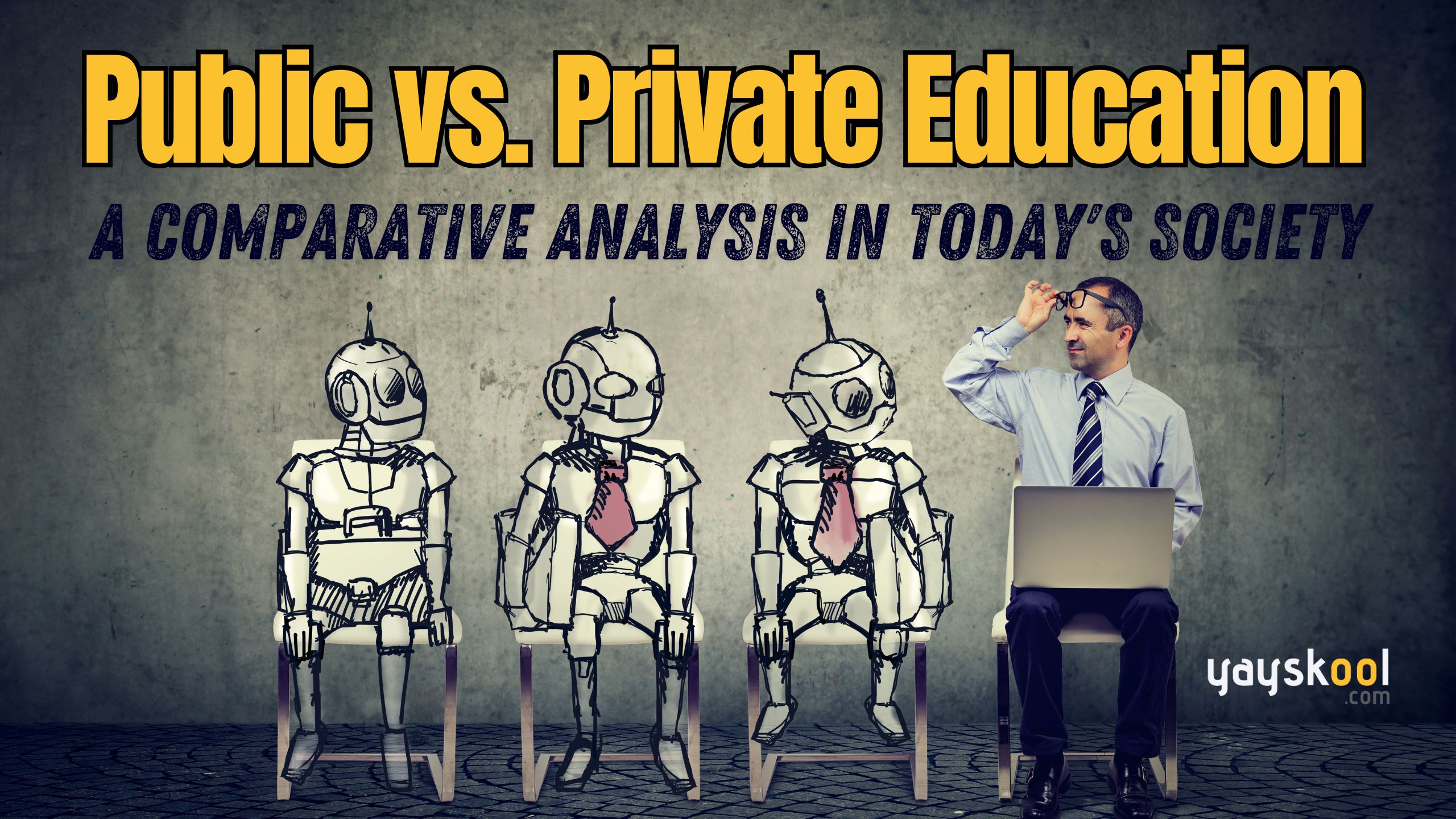
Public vs. Private Education: A Comparative Analysis in Today's Society
Education is one of the most important investments a society can make, and the choice between public and private education has long been a point of debate for families, educators, and policymakers. While both types of schools serve the purpose of educating students, they differ in several key aspects, including funding, accessibility, quality, and the overall experience they offer to students. This article provides a comparative analysis of public and private education in today’s society, examining their advantages, challenges, and the impact they have on students' academic success and long-term outcomes.
1. Funding and Accessibility
Public Education: Public schools are funded primarily through taxes collected by local, state, and federal governments. In the U.S., for example, local property taxes play a significant role in determining the funding for public schools. This system often creates disparities in the quality of education between schools in wealthier areas (which tend to have more funding) and those in economically disadvantaged neighborhoods (which may have fewer resources).
One of the most notable advantages of public education is that it is free for all students. This makes it highly accessible, especially for families with lower incomes who might otherwise struggle to afford private school tuition. Public schools are legally required to accept all students in their geographic area, regardless of their academic performance, background, or special needs.
Private Education: Private schools, on the other hand, are funded through tuition fees paid by families, donations, and sometimes endowments. As a result, private education can be expensive and may not be accessible to families in lower income brackets. The high cost of tuition means that private schools tend to be more selective about who they admit, often taking into account academic performance, entrance exams, or even family background.
While private schools can offer a more tailored educational experience, they are often not an option for students from lower-income families due to the cost barrier.
2. Curriculum and Educational Quality
Public Education: Public schools are generally required to adhere to state or national curriculum standards. This ensures a level of consistency across schools, but it can also limit flexibility. Public schools are often subject to state regulations regarding what is taught, the number of instructional hours, and other educational requirements. This can mean that some public schools, especially in lower-income areas, may face limitations in offering specialized or advanced courses, extracurricular activities, or a broad range of electives.
However, public schools are designed to accommodate a wide range of learning styles and needs, offering special education services, language support, and programs for students with disabilities. Some public schools also offer gifted and talented programs and advanced placement (AP) courses to challenge high-achieving students.
Private Education: Private schools often have more flexibility in designing their curriculum, allowing them to offer specialized programs, unique extracurricular activities, and advanced coursework that might not be available in public schools. This includes specialized arts programs, intensive STEM (Science, Technology, Engineering, Mathematics) courses, and even international baccalaureate (IB) programs. Private schools may also have the ability to introduce innovative teaching methods or curriculum models that are not subject to the same state or federal regulations as public schools.
That flexibility, however, doesn’t necessarily guarantee higher quality. While many private schools have excellent reputations for academic rigor, the quality of education can vary significantly between schools, with some private institutions providing exceptional resources and others struggling with less funding and limited options.
3. Class Size and Student-Teacher Ratio
Public Education: Public schools, especially those in urban or high-demand areas, often struggle with large class sizes due to budget constraints and high enrollment numbers. Larger class sizes can limit individual attention and make it harder for teachers to address the unique needs of each student. This can be particularly challenging in overcrowded schools, where resources such as teaching assistants or specialized staff may not be available to support students.
However, public schools often have the benefit of a more diverse student population, which can enhance the learning experience by exposing students to a variety of perspectives and backgrounds.
Private Education: Private schools typically have smaller class sizes and better student-teacher ratios, which allows for more personalized attention for students. This can be particularly beneficial for students who require more individualized support or who excel in certain subjects and need additional challenges. Smaller class sizes are also beneficial for fostering stronger relationships between students and teachers, which can enhance the overall educational experience.
However, the cost of maintaining small class sizes can make private education inaccessible for many families. Additionally, small class sizes may not always translate into better academic outcomes, as other factors such as curriculum, teaching quality, and resources also play a significant role.
4. Social Environment and Diversity
Public Education: Public schools tend to have a more diverse student body, representing a wide range of socioeconomic backgrounds, ethnicities, and learning needs. This diversity can offer students valuable exposure to different cultures, perspectives, and life experiences, which can contribute to their social and emotional development. Students in public schools also have more opportunities to interact with peers from different walks of life, which can help foster tolerance, empathy, and understanding.
On the downside, public schools in economically disadvantaged areas may struggle with issues such as overcrowding, a lack of extracurricular opportunities, and higher rates of disciplinary problems, which can affect the overall social environment.
Private Education: Private schools often have a more homogeneous student population, as they tend to attract families from similar socioeconomic backgrounds. This can sometimes limit exposure to diverse perspectives and experiences. However, some private schools do have diverse student bodies, especially those in metropolitan areas or those with a specific mission or educational philosophy, such as religious or international schools.
Private schools also often provide a more controlled social environment, with strict codes of conduct, behavior expectations, and a focus on discipline. While this can provide a more structured and supportive atmosphere, it may not always prepare students for the diversity and complexity of the real world.
5. Long-Term Outcomes and College Admissions
Public Education: Graduating from a public school does not automatically limit a student’s ability to succeed in higher education or beyond. Many public schools offer Advanced Placement (AP) programs, college preparatory courses, and guidance counseling to help students prepare for college. Public school graduates, however, may have to work harder to gain access to top-tier universities due to factors like lower standardized test scores or fewer extracurricular opportunities in some schools.
Private Education: Private schools, particularly prestigious ones, often have a track record of sending graduates to elite colleges and universities. The smaller class sizes, advanced coursework, and robust extracurricular offerings can make private school graduates more competitive in the college admissions process. Furthermore, private schools often have established relationships with top colleges, which can help students with the application and admissions process.
However, attending a private school does not guarantee success in college or later life. While private school graduates may have a higher likelihood of attending selective colleges, success depends on a variety of factors, including individual motivation, academic performance, and personal circumstances.
Inference
The decision between public and private education depends on many factors, including financial considerations, the needs and preferences of the student, and the quality of schools available in a given area. Public education offers accessibility, diversity, and a broad range of services but may face challenges with funding and overcrowding. Private education provides more personalized attention, specialized programs, and often smaller class sizes but can be prohibitively expensive and less diverse. Ultimately, the best choice for a student will depend on their unique needs, goals, and the resources available to their family. Both systems have the potential to offer high-quality education, and with ongoing efforts to address disparities, public education in particular could serve as an even greater equalizer in today's society.










.jpg)