Challenges and Potential of Rural Education in India: Overcoming Hurdles and Unlocking Opportunities
Education is the foundation of any society’s progress. In India, while urban areas have witnessed significant strides in educational development, rural areas continue to struggle with a host of challenges that undermine their educational system. However, despite these barriers, there is tremendous potential for transformation through innovative solutions, community involvement, and the right policies.
This blog delves into the challenges that plague rural education in India and the incredible potential it holds, with examples from both struggles and success stories.
Challenges of Rural Education in India
-
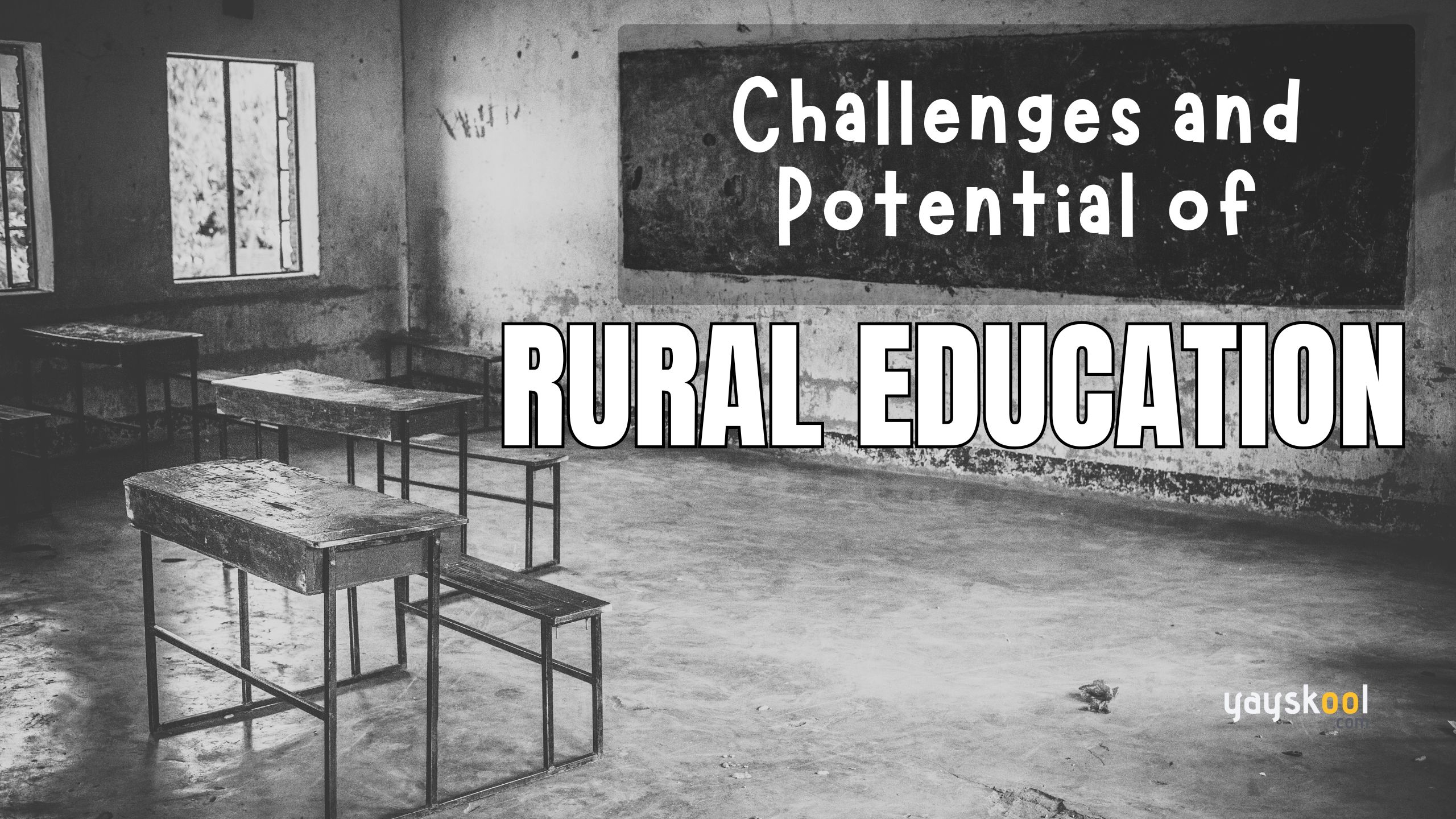
Lack of Infrastructure Rural schools often lack the basic infrastructure necessary for effective learning. Imagine a classroom with no blackboards, leaking roofs, or broken furniture. This is the reality for many children in villages. For example, in Bihar, a significant number of schools lack proper buildings, and classes often take place in open fields or makeshift structures. Without access to essential facilities like clean drinking water, sanitation, and electricity, the environment is not conducive to learning.
Example: In some villages, students are forced to study under the open sky during the monsoon season, as classrooms flood. This leads to a high absenteeism rate, particularly during the rainy months.
-
Teacher Shortage and Quality A shortage of trained and qualified teachers is one of the most significant obstacles to rural education. According to a report from the Ministry of Education, rural schools in India face a deficit of teachers. Even when teachers are available, many are underqualified and lack proper training, leading to ineffective teaching methods.
Example: In Rajasthan, many schools have only one teacher for all grades, making it nearly impossible for them to give individual attention to students. This lack of expertise leads to high dropout rates and poor academic performance.
-
Low Enrollment and High Dropout Rates Although India has made progress in increasing enrollment rates, rural areas still see significant dropout rates, particularly in the higher grades. Economic factors play a crucial role in this. Children from rural families often drop out of school to support their families by working on farms, in factories, or doing menial jobs.
Example: A study by the Azim Premji Foundation showed that many children in rural Maharashtra drop out by the time they reach the secondary school level, primarily because they are expected to contribute to household income.
-
Gender Disparity in Education Gender inequality is another barrier in rural education. Girls, particularly in conservative regions, are often denied the opportunity to pursue education beyond a certain level. Early marriages, societal expectations, and household responsibilities make it difficult for rural girls to stay in school.
Example: In some parts of Uttar Pradesh, parents often prefer to marry off young girls instead of sending them to school. According to data, female literacy rates in rural areas are consistently lower than male literacy rates, with only 46% of rural women being literate compared to 68% of men.
-
Health and Nutrition Issues The health and nutrition of children in rural areas also impact their academic performance. Malnutrition, lack of access to healthcare, and high rates of diseases affect children’s ability to focus and attend school regularly. For example, children with iron-deficiency anemia and other nutrition-related issues often exhibit poor concentration and fatigue in class.
Example: In Odisha, health programs such as Mid-Day Meal Scheme have shown positive results in improving the attendance of children in schools by ensuring they receive at least one nutritious meal a day. However, many rural children still suffer from poor nutrition, which impacts their learning capacity.
-
Digital Divide With the increasing shift toward digital education, rural students are left behind due to the lack of access to the internet, smartphones, or computers. During the COVID-19 pandemic, millions of rural children were unable to attend online classes, exacerbating educational inequalities.
Example: In rural Tamil Nadu, many students had to rely on paper-based learning materials during the pandemic as they did not have access to digital devices, leaving them at a significant disadvantage compared to their urban counterparts.
Potential of Rural Education in India
Despite the many challenges, rural education in India also has immense potential. With the right policies, investments, and community involvement, rural education can lead to transformative change, not only for rural communities but for the nation as a whole.
-
Government Initiatives for Reform The government has introduced several reforms aimed at improving rural education. The Sarva Shiksha Abhiyan (SSA), launched in 2000, aimed to provide free and compulsory education for children between the ages of 6 and 14. Another initiative, the Mid-Day Meal Scheme, has had a profound impact on school attendance and student performance.
Example: In Andhra Pradesh, the Bala Janagraha Initiative has helped improve rural school infrastructure by involving the community in school management. This approach has resulted in better resources and a more accountable education system.
-
Innovative Education Models and Community Engagement Non-governmental organizations (NGOs) and social enterprises are leading the way in innovating educational models for rural areas. Pratham, an NGO working across rural India, runs the Read India program, which focuses on improving reading and math skills for children in underserved communities. Their efforts have helped thousands of children in villages achieve better learning outcomes.
Example: Barefoot College, in Rajasthan, trains women from rural areas as solar engineers, providing them with not only technical skills but also the ability to uplift their communities. Such vocational and skill-based education programs have proven highly successful in bridging the gap between education and employment.
-
Use of Technology in Rural Education Technology has the potential to revolutionize rural education. E-learning platforms, mobile-based educational apps, and online tutorials can reach even the most remote villages. Initiatives like BYJU’S have started providing free online learning content, and some schools have even started using interactive digital tools for teaching.
Example: In Karnataka, the government has launched the Namma Shikshana project, using digital devices and solar-powered technology to ensure that rural schools have access to educational resources. These efforts are helping to narrow the digital divide.
-
Vocational and Skill-Based Education Skill-based education is another area where rural India can thrive. Many rural areas have industries related to agriculture, crafts, textiles, and manufacturing. Providing children with vocational training and market-oriented skills can help them find gainful employment without migrating to cities.
Example: National Skill Development Corporation (NSDC) partners with local educational institutes to provide skills training in areas like tailoring, carpentry, and agriculture. This allows students to gain practical skills while also earning an income.
-
Public-Private Partnerships Collaboration between the public and private sectors has the potential to significantly improve rural education. Organizations like Teach for India and Aarohan have successfully implemented teacher training programs and educational interventions in rural areas, helping to address teacher shortages and improve educational quality.
Example: The Akshay Patra Foundation provides mid-day meals to millions of children across rural India, ensuring they receive at least one nutritious meal per day. Their involvement not only improves attendance but also keeps children healthy and focused.
-
Community-Driven Education The power of community involvement cannot be overstated. Communities in rural areas have the potential to drive educational change by taking ownership of local schools. Village Education Committees (VECs) in places like Madhya Pradesh and Uttarakhand have successfully managed the functioning of schools, improving attendance, enrollment, and quality of education.
The challenges of rural education in India are undeniable, but they are not insurmountable. The potential to transform rural education exists, and with the right combination of government support, community participation, and technological interventions, the quality of education in rural India can be significantly improved.
India’s future depends on its rural children, and by addressing these challenges and unlocking the potential of rural education, we not only uplift millions of children but also ensure that the nation as a whole progresses toward greater equality and prosperity.













.jpg)